Technology is advancing at an ever-increasing pace. Artificial Intelligence (AI), automation, instant services, and even a more convenient lifestyle are now part of everyday life. In many ways, these advances help people work more efficiently and live faster.
However, amidst these changes, an interesting phenomenon has emerged: more and more people are starting to seek something more natural.
From clean eating lifestyles, to the growing interest in minimally processed foods, to the increasing attention to the origins of food, modern consumers are becoming more aware of what they consume every day.
Food is no longer seen simply as something to fill the stomach, but also as part of long-term health and quality of life.
Modern Society is Increasingly Conscious of Food Quality
A fast-paced lifestyle often leads many people to rely on ultra-processed foods, those high in sugar, salt, or saturated fat. However, in recent years, awareness of the impact of diet on health has increased.
Many consumers are now becoming more selective in their food choices:
- looking for better protein sources,
- paying attention to nutritional content,
- reducing overly processed foods,
- and choosing ingredients that taste more natural and simple.
This change is also driven by increased access to health information through the internet, social media, and education from nutritionists and health institutions.
In food education materials from the SEAFAST Center IPB University, healthy food is defined as food that is safe, nutritionally balanced, and meets the body’s needs.
This means that the natural food trend is not just a passing lifestyle, but part of a shift in how society views health.
In a Digital World, People Seek Something More “Real”
Interestingly, the more digital people’s lives become, the greater the desire to return to something that feels authentic.
This is evident in the growing interest in:
- fresh ingredients,
- products with simple ingredients,
- foods with more transparent processes,
- and food products with clear origins.
Modern consumers now ask not only:
“Is it tasty or not?”
but also:
- “Where does this food come from?”
- “How is it produced?”
- “Is it safe to consume?”
- “Is it produced responsibly?”
These changes make concepts such as traceability, food safety, and sustainable cultivation increasingly important in the modern food industry.
Natural Protein Is Increasingly Popular
Amidst the growing trend for healthy living, natural protein sources are also gaining attention.
The body needs protein to help maintain muscle mass, support metabolism, and aid in daily bodily functions. Therefore, many people are now looking for protein sources that are:
- high in nutrients,
- low in excess fat,
- minimally processed,
- and suitable for an active lifestyle.
Seafood is becoming an increasingly popular choice because it is known as a source of quality protein containing important nutrients such as omega-3, vitamin B12, selenium, and phosphorus.
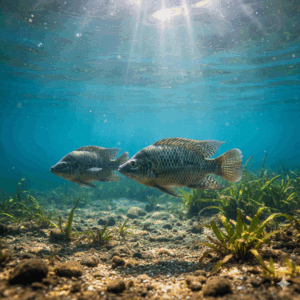
Tilapia, for example, is known for its high protein content and relatively low fat content, making it a popular choice as part of a balanced diet.
Natural Foods Are Also Linked to Food Safety
In the modern era, natural foods are not just about their “fresh” appearance, but also about how the product is produced.
Consumers are now increasingly aware that food quality is influenced by:
- the production environment,
- water quality,
- cultivation systems,
- use of additives,
- and food safety standards.
Therefore, modern food products trusted by consumers generally have:
- transparent production processes,
- food safety standards,
- and clear traceability systems.
In discussions of global modern seafood, consumers are increasingly demanding food products that are safe, traceable, and responsibly produced.
This shows that natural foods are now synonymous with quality and trust.
Modern Aquaculture is Now Moving in a More Responsible Direction
The development of the modern food industry has also led many producers to adopt more sustainable production approaches.
In the aquaculture industry, for example, modern aquaculture practices are increasingly focused on:
- water quality,
- feed efficiency,
- fish health,
- sanitation and biosecurity,
- and environmental management.
This approach is crucial to help maintain product quality while supporting long-term environmental sustainability.
Therefore, sustainable seafood is increasingly seen as part of the future of the global food system.
Why Is the Modern Generation Returning to Simple Food?
In the midst of increasingly fast-paced lives, many people are beginning to realize that health often comes down to the basics: adequate sleep, physical activity, nutritious food, and more natural ingredients.
Simple food is now seen as a form of modern wellness. This doesn’t have to be expensive or complicated, but rather food that is minimally processed and of clear quality.
This phenomenon is also evident in the increasing interest in home cooking, clean eating, whole foods, and consuming natural proteins as part of a healthy daily lifestyle.
Returning to Natural Food Is Not Just a Trend
Changes in consumer patterns show that natural food is no longer just a passing trend.
In the era of AI and fast-paced living, many people are starting to seek out foods that feel simpler, more transparent, and more closely aligned with their body’s needs.
Because ultimately, in an increasingly complex world, many people want to return to something more natural and trustworthy. As part of the Indonesian aquaculture industry, Regal Springs Indonesia presents Naturally Better Tilapia, farmed in natural lakes with an approach focused on quality, food safety, and responsible farming practices to support more natural protein choices for modern society.