Tilapia is increasingly consumed as a daily protein source due to its mild flavor, versatility, and suitability for various family meals. However, as fish consumption continues to grow, an important question arises: How can consumers ensure that the tilapia they purchase is truly safe and high quality?
Understanding fish quality is not only about physical appearance but also closely related to farming practices, processing methods, and food safety standards. Here is a practical guide to recognizing safe and high-quality tilapia.
Check the Physical Characteristics of Tilapia
The first step consumers can take is to observe the physical condition of the fish.
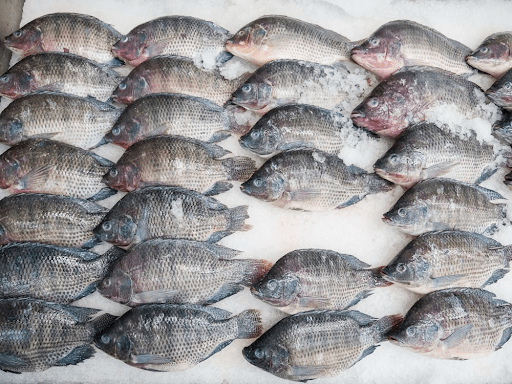
Fresh, high-quality tilapia has firm and elastic flesh that does not feel mushy when pressed. The meat should appear bright and clean, not dull or grayish. The aroma should be fresh and mild, not overly fishy or sour.
For tilapia fillets, the surface should be clean, without excessive slime or suspicious spots. While physical characteristics are important, they alone are not sufficient to guarantee overall fish safety.
Understand the Source and Farming Process
Safe tilapia comes from well-controlled aquaculture systems. Proper farming practices focus on water quality, feed standards, fish density, and overall fish health.
Tilapia farmed without proper supervision may be exposed to antibiotic residues, harmful chemicals, or poor environmental conditions. Therefore, it is important for consumers to understand the fish’s origin and choose producers who take responsibility for the entire process, from farm to table.
Certification as an Important Indicator of Safety and Quality
One of the most objective ways to ensure that tilapia is safe and high quality is by checking official certifications held by the producer.
Certifications such as ASC (Aquaculture Stewardship Council) indicate that the fish is farmed responsibly, with attention to environmental sustainability, fish welfare, and social impact.
BAP (Best Aquaculture Practices) evaluates farming operations, feed management, hatchery standards, and processing systems to ensure food safety and sustainability.
Meanwhile, GMP (Good Manufacturing Practices) ensures that fish processing is carried out under strict hygiene, safety, and quality standards.
Most importantly, these certifications are audited by independent third parties, meaning that quality claims are professionally verified and not solely based on producer statements.
The Importance of Transparent and Trusted Producers
High-quality fish producers are generally transparent about their farming and processing practices. They can clearly explain the origin of their fish, the standards they apply, and their commitment to food safety and sustainability.
Regal Springs Indonesia is one of the tilapia producers that applies international standards through certifications such as ASC, BAP, and GMP. The entire production process is audited by independent third parties to ensure that the tilapia produced is safe, consistent, and of high quality.
This approach provides additional assurance for consumers that the fish they consume is not only visually fresh but also safely produced.
Pay Attention to Handling and Storage
In addition to producer quality, handling and storage also influence fish safety. Tilapia should be stored at consistently cold temperatures and should not be left at room temperature for extended periods.
Proper packaging that is clean, sealed, and intact is another indicator that the fish has been handled according to correct safety standards before reaching consumers.
Choose Carefully Before Buying
Identifying safe and high-quality tilapia requires attention to several key factors. Fresh physical characteristics, clear farming origins, and official certifications audited by third parties are essential indicators that should not be overlooked.
By choosing tilapia from producers that hold certifications such as ASC, BAP, and GMP, consumers can feel more confident that the fish has been responsibly and safely produced.
High-quality tilapia is not only about taste, but also about safety, transparency, and commitment to high standards.