
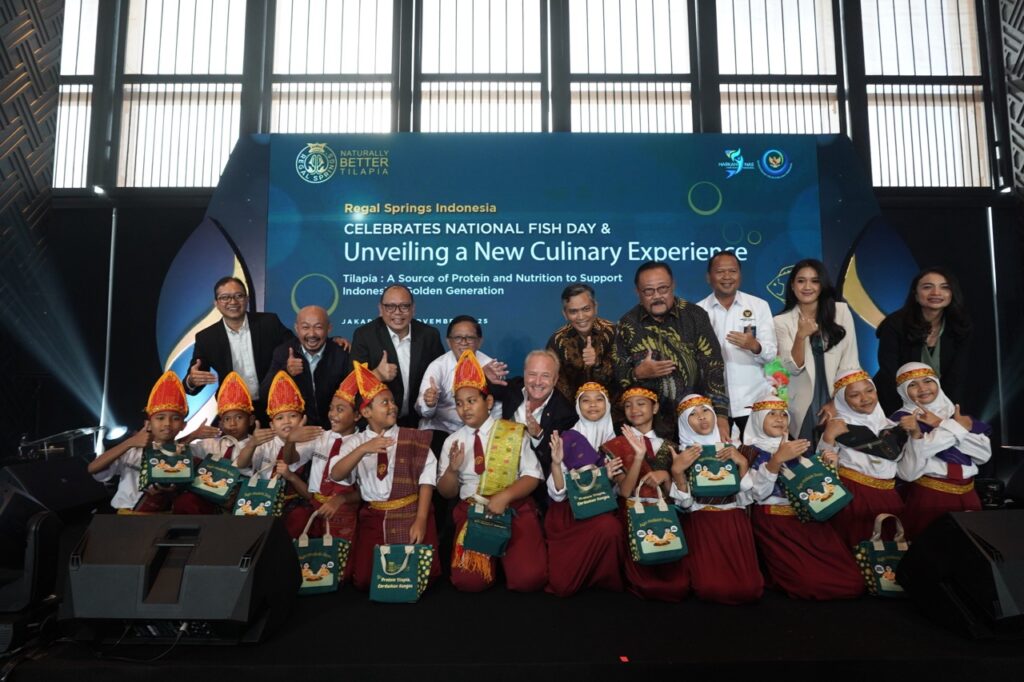
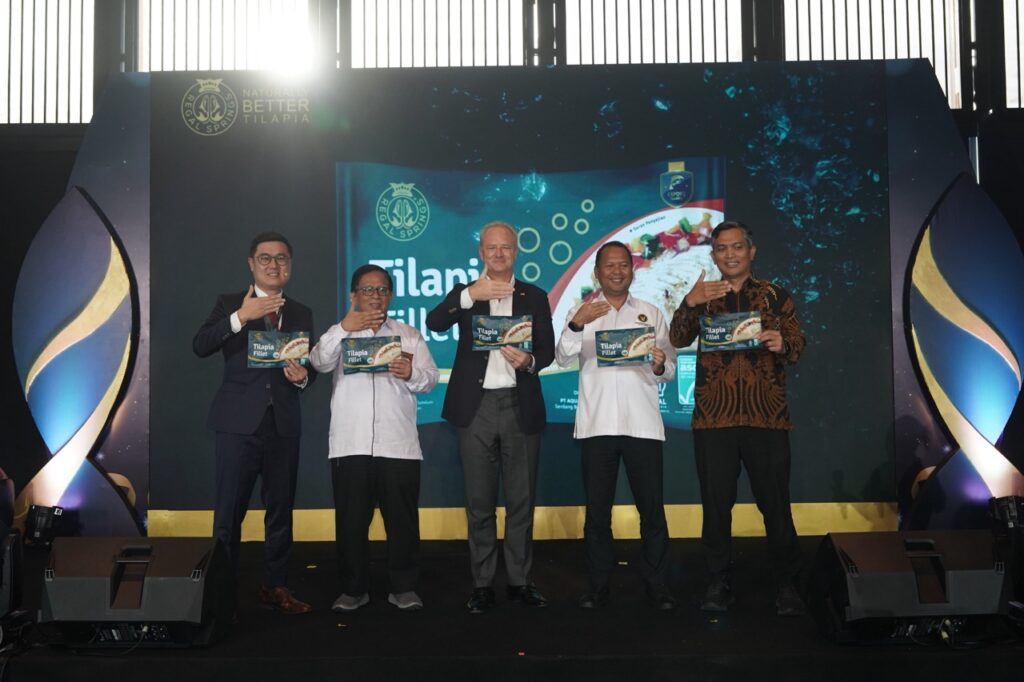
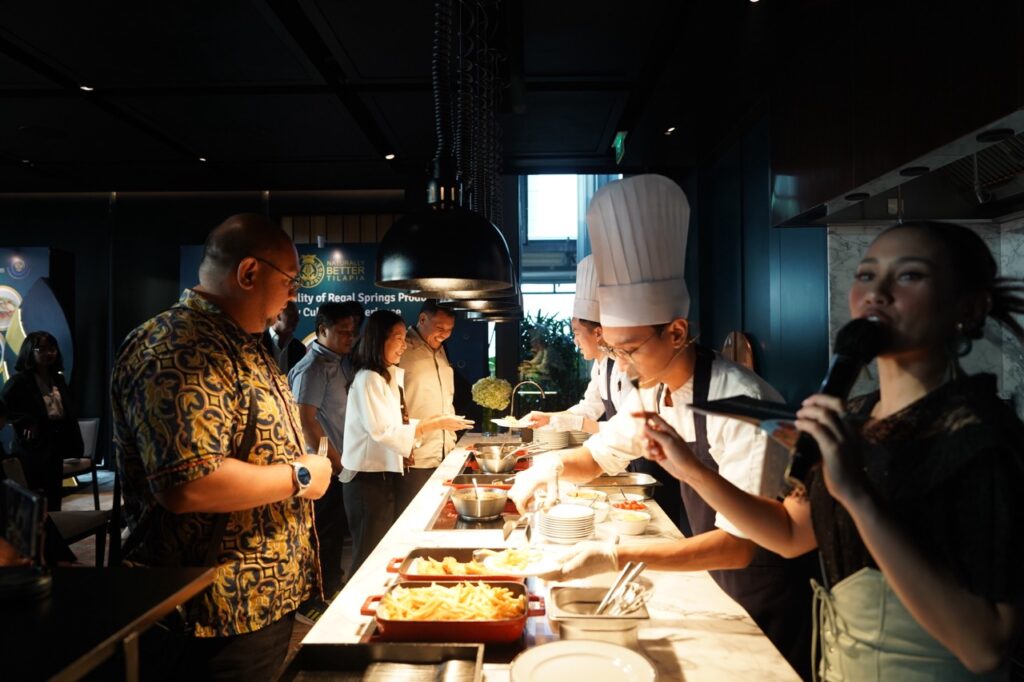
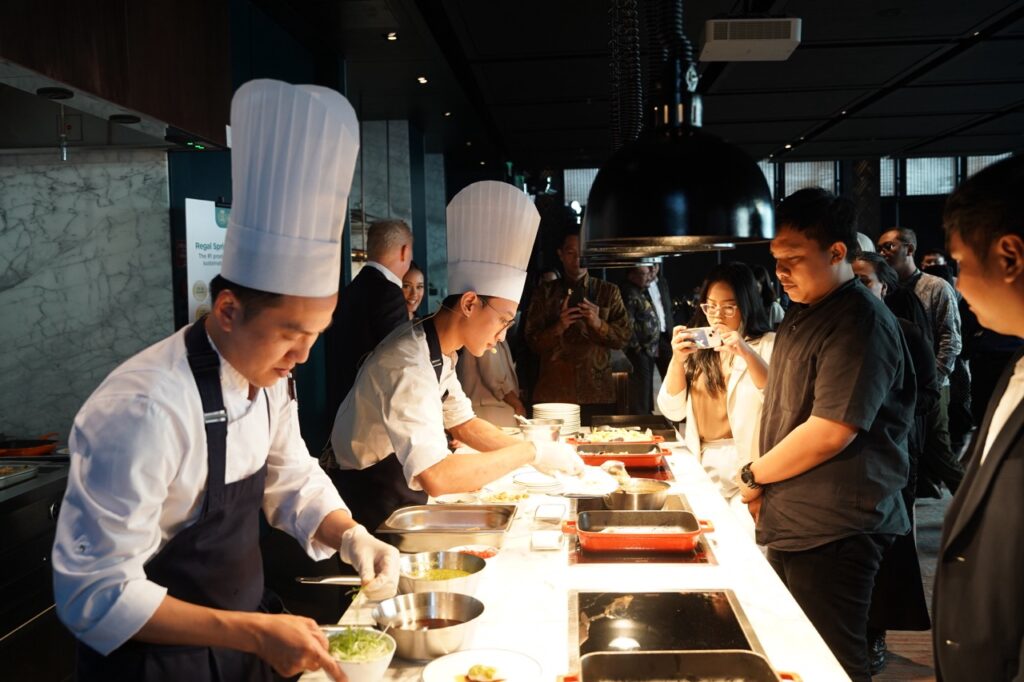
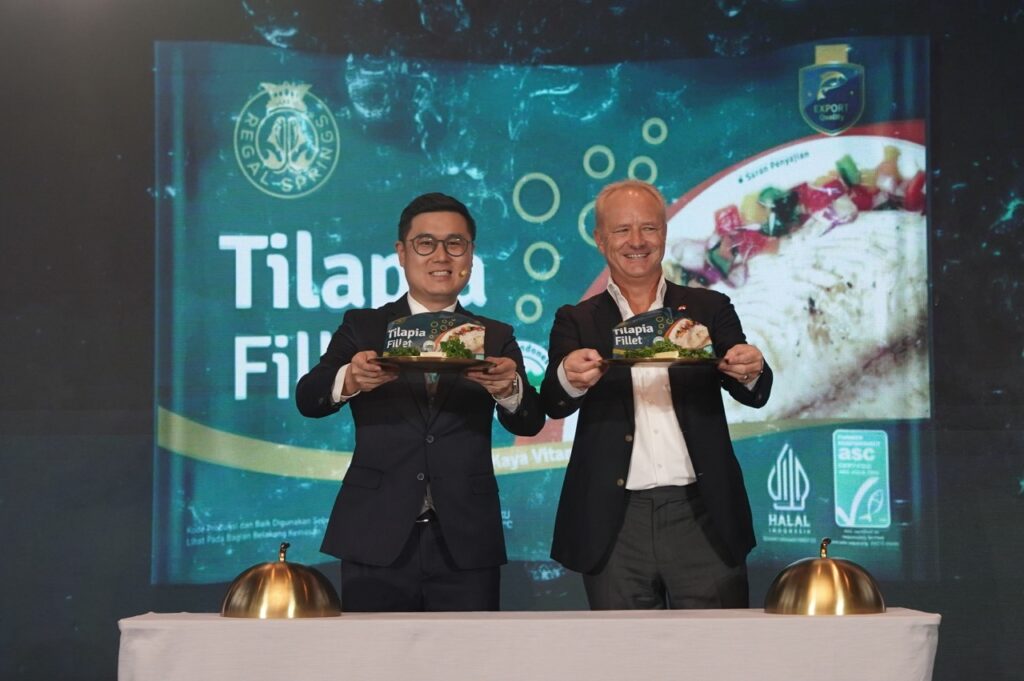
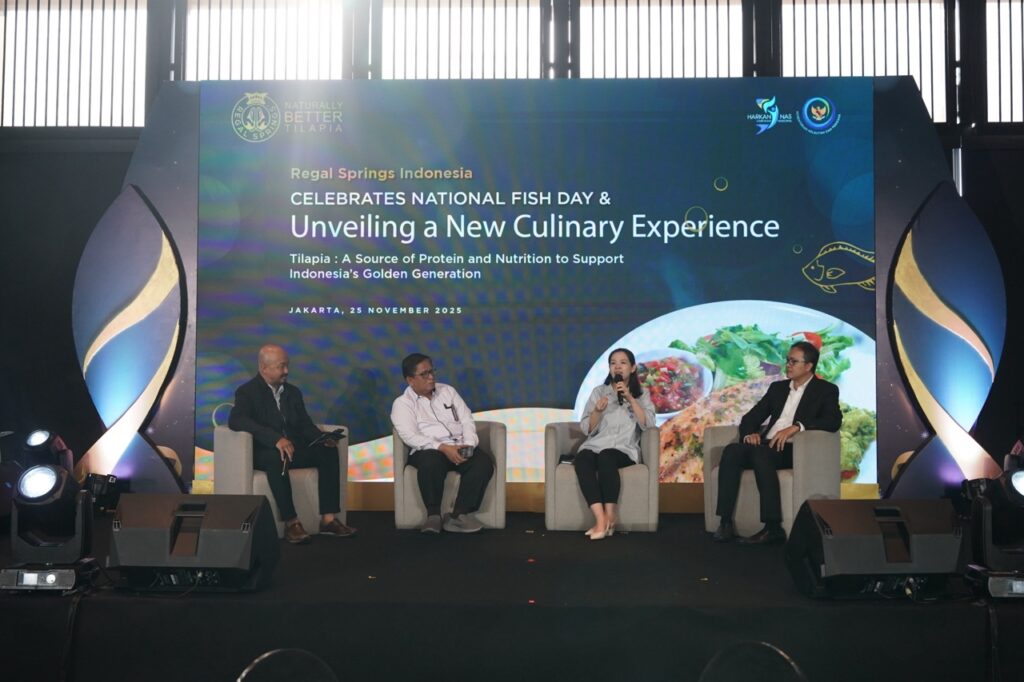
Jakarta, 25 November 2025 – In commemoration of National Fish Day 2025, Regal Springs Indonesia (PT Aqua Farm Nusantara) took a strategic step to strengthen its position in the integrated aquaculture sector while supporting the national agenda to enhance food security through high-quality fish protein. Through an event themed “Celebrate National Fish Day & Unveiling a New Culinary Experience: Tilapia — A Source of Protein and Nutrition to Support Indonesia’s Golden Generation,” Regal Springs Indonesia held a stakeholder discussion forum and launched its new Tilapia Fillet packaging in Jakarta.
The event was attended by the Director General of Aquaculture, Ministry of Marine Affairs and Fisheries (MMAF), TB. Haeru Rahayu; Head of Post-Harvest Quality Center, BPPMHKP KKP, Widya Rusyanto; Director of Fish Processing, Directorate General of PDSPKP KKP, Tri Aris Wibowo; Clinical Nutrition Specialist Dr. Kristina Joy, BMedSc (Hons), M.Gizi, Sp.GK; and President Director of Regal Springs Indonesia, Rudolf Hoeffelman.

In her virtual remarks, the Head of the Agency for Quality Control and Monitoring of Marine and Fisheries Products (BPPMHKP KKP), Ir. Ishartini, expressed her appreciation to Regal Springs Indonesia. She emphasized that as the world’s population continues to grow, the demand for animal protein is also increasing. Fish is recognized as one of the best sources of nutrition, particularly for children’s growth and improvements in overall health.
Ishartini highlighted that tilapia is one of the leading freshwater aquaculture commodities with high nutritional value, containing approximately 25 grams of protein per 100 grams, along with omega-3 and other essential vitamins beneficial for heart, brain, and overall body function. “Therefore, let us together transform fish-eating habits and build positive perceptions of fish consumption through outreach, education, product diversification, ready-to-cook fish availability, and ensuring access to fresh, high-quality fish for the public,” she stated.
She added, “The supply of aquaculture-based fish protein must continue to be developed responsibly, with environmental stewardship. Regal Springs Indonesia has demonstrated this commitment through its environmental care initiatives in Lake Toba, where tilapia is cultivated. Through collaboration between the government, businesses, and stakeholders, we can advance the fisheries sector and help produce Indonesia’s Golden Generation.”
On this National Fish Day 2025, President Director of Regal Springs Indonesia, Rudolf Hoeffelman, reinforced the importance of collaboration between Regal Springs Indonesia and the government in providing high-quality fish products that contribute to national and global food security, while supporting the blue economy.
“Tilapia has become one of Indonesia’s key export commodities in the fisheries sector and continues to see rising demand in global markets. Today, we aim to bring the same culinary experience enjoyed by our consumers abroad to Indonesian families through tilapia,” he said.
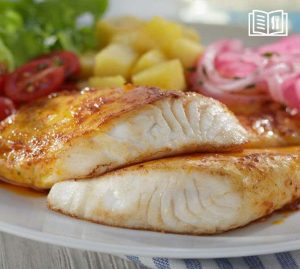
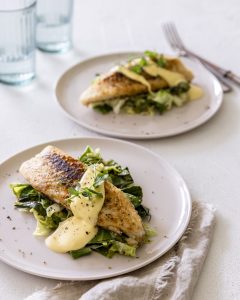
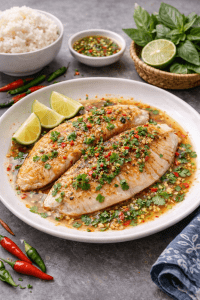
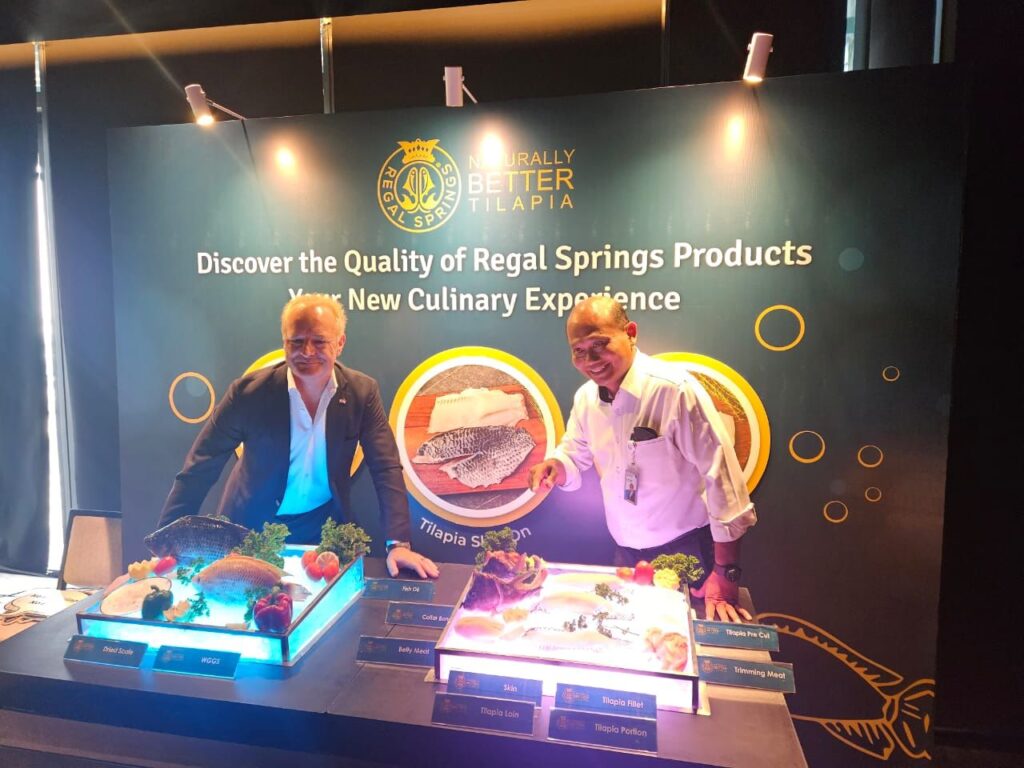
He further explained that the newly launched tilapia fillet packaging is designed to help consumers enjoy premium-quality fish, feel more confident in preparing it in various ways, and achieve better cooking results. “This is part of our effort to introduce the experience of consuming the new generation of whitefish,” Rudolf added.
Director General of Aquaculture, MMAF, TB. Haeru Rahayu, reiterated that aquaculture must be conducted in an environmentally friendly and sustainable manner, aligned with Good Aquaculture Practices (CBIB), the blue economy framework, and applicable regulations. “Continuous studies and comprehensive assessments involving academia, industry players, associations, communities, government, and media are essential. This collaboration is crucial to maintaining Indonesia’s position as a leading exporter, enabling tilapia to continue penetrating global markets,” he said.
During the business outlook session, Tri Aris Wibowo highlighted that Indonesia’s tilapia sector still holds strong potential for domestic and international markets. He noted that 98.7% of Indonesia’s tilapia exports are in the form of frozen fillets, with the United States being the primary market, accounting for 64.8% of total exports. Indonesia is currently the world’s third-largest exporter of frozen tilapia after China and Colombia. “Indonesian tilapia is known for being free from export rejections globally, demonstrating compliance with international quality and sustainability standards,” he emphasized.
In the health discussion session, Head of the Post-Harvest Quality Center, Widya Rusyanto, underlined that improving post-harvest quality is essential for building consumer trust in domestic aquaculture products. “High-quality fishery products are an investment in the nation’s health. With strong traceability, we ensure that the fish consumed by the public is safe and of the highest quality,” he said.
Nutrition specialist Dr. Kristina Joy emphasized the importance of healthy protein selection to support children’s development and overall quality of life. “Tilapia is high in protein, low in fat, and rich in vitamins and minerals. This makes it an ideal choice for children’s linear growth, cell and tissue repair after illness, muscle maintenance in adults and seniors, and hormone regulation and metabolism,” she explained.
Tri D. Saputra, Director of Regal Springs Indonesia, added that the company holds full certification across its hatchery, farming, feed mill, and processing facilities to ensure sustainability from upstream to downstream. “Through strong traceability, quality assurance, and both national and international certifications, Indonesian tilapia can become the next generation of whitefish globally,” he stated.
Regal Springs Indonesia hopes that this initiative becomes a sustainable effort to strengthen national and global fisheries value chains, enhance family nutrition literacy, and support the vision of Indonesia’s Golden Generation 2045 by ensuring access to high-quality, nutritious fish protein for all communities.